
My First Sausage Mess
Let me tell you about my first time. I was so nervous. I overstuffed the casing. It looked like a lumpy snake! I still laugh at that.
But you know what? We cooked it anyway. It tasted wonderful. The lesson is, it doesn’t have to be perfect. Homemade food is made with love. That always matters most. What was your first kitchen mess? I love hearing those stories.
Why We Chill Everything
You must chill the meat and grinder parts. This seems fussy. But it is very important. Cold meat grinds cleanly. It keeps the fat from smearing.
Warm meat makes a greasy, mushy sausage. Chilled meat makes a perfect, firm texture. This step matters because texture is everything. A good sausage should snap when you bite it. Doesn’t that sound good?
The Secret is in the Mix
After grinding, you mix. Use your hands! Feel the meat get sticky. This is called “binding.” It means the proteins are holding hands.
This stickiness is what holds your sausage together. It lets you make links. Fun fact: That cup of ice water helps the mixing. It keeps everything cold and helps the spices spread evenly. Always make a tiny test patty. Fry it and taste. Do you like more pepper or salt? Now is the time to fix it.
Friendship and Sausage Casings
Those casings seem strange. They are natural hog casings. Just rinse and soak them. They become soft and slippery. Do not be afraid of them.
Threading the casing is a two-person job for beginners. My grandson helps me. We laugh a lot. It is a good memory. Cooking with someone is a special joy. Do you have a favorite person to cook with?
Twist, Prick, and Cook
Now for the fun part. Guide the meat into the casing. Fill it firmly but gently. Then, pinch and twist to make links. Use a clean pin to prick tiny holes.
Pricking lets steam escape. This stops your links from bursting in the pan. Nobody wants that! Now you can cook them. The smell in your kitchen will be amazing. Will you grill yours or pan-fry them? Tell me your favorite way to cook sausage.
Ingredients:
| Ingredient | Amount | Notes |
|---|---|---|
| Pork with fat | 2 lbs | 1/4 diced, 3/4 ground |
| Well marbled beef | 2 lbs | 1/4 diced, 3/4 ground |
| Bacon (optional) | 6-12 oz | Use if meats are leaner; can be frozen |
| Sea salt | 3 tsp | |
| Whole yellow mustard seed | 1 Tbsp | |
| Black pepper | 1 tsp | |
| Mrs. Dash or favorite salt free seasoning | 1/2 tsp | |
| Ice cold water | 1 cup | |
| Natural hog casings | 2 (about 10-12 feet total) |
My Family’s Favorite Homemade Sausage
Hello, my dear. Come sit. Let’s make kielbasa like my babcia taught me. It’s a happy kitchen project. The smell will fill your whole house with love. I still smile thinking of my first try. I was so nervous about the casings!
Don’t let the steps scare you. We’ll go nice and slow. It’s like a fun science experiment you can eat. Just keep everything cold. That’s the big secret. Ready? Let’s begin.
Step 1: Prep the Meat
First, we get our meats very cold. Put the pork and beef on a tray. Pop it in the freezer for about an hour and a half. You want it firm, like clay. Put your grinder parts in the freezer, too. A cold bowl helps everything stay perfect. (Hard-learned tip: If the meat gets warm, it gets greasy. Brr is good!)
Step 2: Prep the Casings
Now, let’s wake up the casings. They come packed in salt. Rinse them well under warm water. Then let them soak in a bowl of warm water. They need to get soft and slippery. This takes about an hour. Doesn’t that feel funny? They are like little edible noodles.
Step 3: Grind the Meat
Time to grind! Dice some of that very cold meat into little cubes. Chop the rest into chunks. Set up your grinder. Feed the meat chunks and bacon through. Listen to that squishy sound. It’s so satisfying. All the ground meat goes into your cold bowl. What kitchen tool makes the squishy sound? Share below!
Step 4: Season & Mix
Here comes the flavor. Sprinkle all your seasonings over the meat. Use your hands to mix it for 30 seconds. Now add the ice water. Mix for one full minute. You’ll feel it start to stick together. Make a little patty and fry it to taste. This is the cook’s reward!
Step 5: Stuff the Sausage
The fun part—stuffing! Slide a casing onto the stuffing tube. Leave a little tail. Keep your meat mixture cold. Feed it into the machine slowly. Use one hand to guide the sausage as it comes out. Fill it firmly, but don’t burst it. If you see air bubbles, just poke them with a pin. I still laugh at my first wobbly sausage chain.
Step 6: Form Links & Finish
Almost done! Now you have one long, beautiful rope. Pinch and twist to make links. Or coil it for a classic look. Prick each link with a pin in a few spots. This stops them from bursting when they cook. You did it! You can cook them now or freeze some for later.
| Cook Time: | Varies (Grill 15-20 mins) |
| Total Time: | About 4 hours (with soaking & chilling) |
| Yield: | 4 pounds of sausage links |
| Category: | Main Dish, Project |
Three Tasty Twists to Try
Once you know the basic dance, you can change the music. Try one of these fun twists next time. They make the recipe your own.
- Apple & Sage: Add a grated apple and a tablespoon of fresh sage. It tastes like a cozy fall day.
- Spicy Firecracker: Mix in two teaspoons of smoked paprika and a pinch of cayenne. It has a nice little kick!
- Garlic Lover’s Dream: Use six minced garlic cloves and a teaspoon of marjoram. So simple, so good.
Which one would you try first? Comment below!
How to Serve Your Masterpiece
Oh, the sizzle in the pan is the best sound. For a simple supper, I grill a few links. I serve them with buttery mashed potatoes and sauerkraut. Or, slice them into a pot of bean soup for extra heartiness. On a bun with grilled onions and mustard? Perfect for a crowd.
What to drink? A cold lager beer pairs wonderfully. For a treat without alcohol, try sparkling apple cider. The bubbles cut through the richness so nicely. Which would you choose tonight?
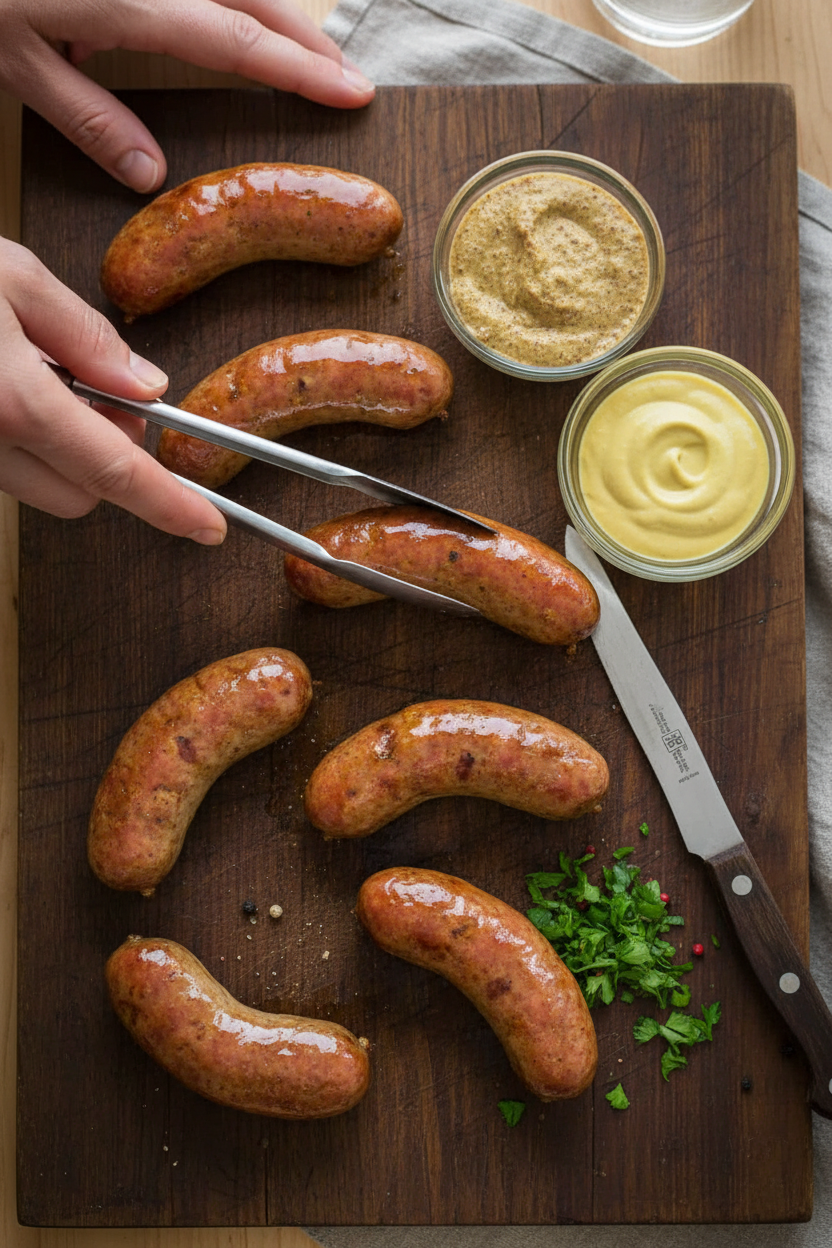
Keeping Your Homemade Sausage Perfect
Let’s talk about keeping your sausage tasty. Fresh sausage stays good in the fridge for three to five days. Wrap it well in plastic wrap. For longer storage, the freezer is your friend. I wrap each link in parchment paper first. Then I put them all in a freezer bag. This way, they don’t stick together. You can grab just one link for a quick meal.
Batch cooking saves so much time. Make the full four-pound recipe. You can cook some now and freeze the rest raw. My first time, I cooked all the links at once. I learned that freezing some raw keeps them juicier. Now I always freeze half the batch. This matters because a ready meal is a happy kitchen. A busy day feels easier with homemade food waiting.
To reheat, thaw frozen links in the fridge overnight. Then cook them gently in a pan with a little water. Steam them first, then let them brown. This keeps them from drying out. Have you ever tried storing it this way? Share below!
Sausage-Making Troubles and Simple Fixes
First, the meat mixture can get too warm. This makes it greasy and hard to stuff. Keep everything cold. I remember my first summer batch. The kitchen was hot and the meat turned soft. Now I work fast and keep the bowl in a bigger bowl of ice.
Second, casings can tear if you overstuff them. Fill them firmly but gently. If you see a thin, shiny spot, stop adding meat there. A torn casing is not the end. You can just twist the sausage before the tear. This matters because gentle handling makes a better texture.
Third, air bubbles are common. Do not worry. Just prick the casing with a clean pin. I use a toothpick. Prick where you see the bubble. Let the air out. This prevents bursting when you cook them. Getting this right builds your cooking confidence. You learn that small fixes lead to great flavor. Which of these problems have you run into before?
Your Sausage Questions, Answered
Q: Is this recipe gluten-free? A: Yes, it is. All the ingredients listed are naturally gluten-free.
Q: Can I make it ahead? A: Absolutely. You can make the mixture a day before stuffing. Keep it covered in the fridge.
Q: What if I don’t have hog casings? A: No problem. You can form the meat into patties. They will taste just as delicious.
Q: Can I halve the recipe? A: You can, but it is a bit of work. I suggest making the full batch and freezing some. *Fun fact: This recipe freezes so well, it’s like a gift to your future self!*
Q: Is the bacon optional? A: Yes. Use it if your pork and beef seem lean. It adds good flavor and fat. Which tip will you try first?
From My Kitchen to Yours
I hope you feel proud making your own sausage. It connects us to old, good ways of cooking. The smell filling your kitchen is a wonderful thing. I would love to see what you create. Share your cooking story with me.
Have you tried this recipe? Tag us on Pinterest! Use our handle @GrandmasKitchenTips. I always look for your photos. They make my day. Thank you for cooking with me.
Happy cooking!
—Lena Morales.

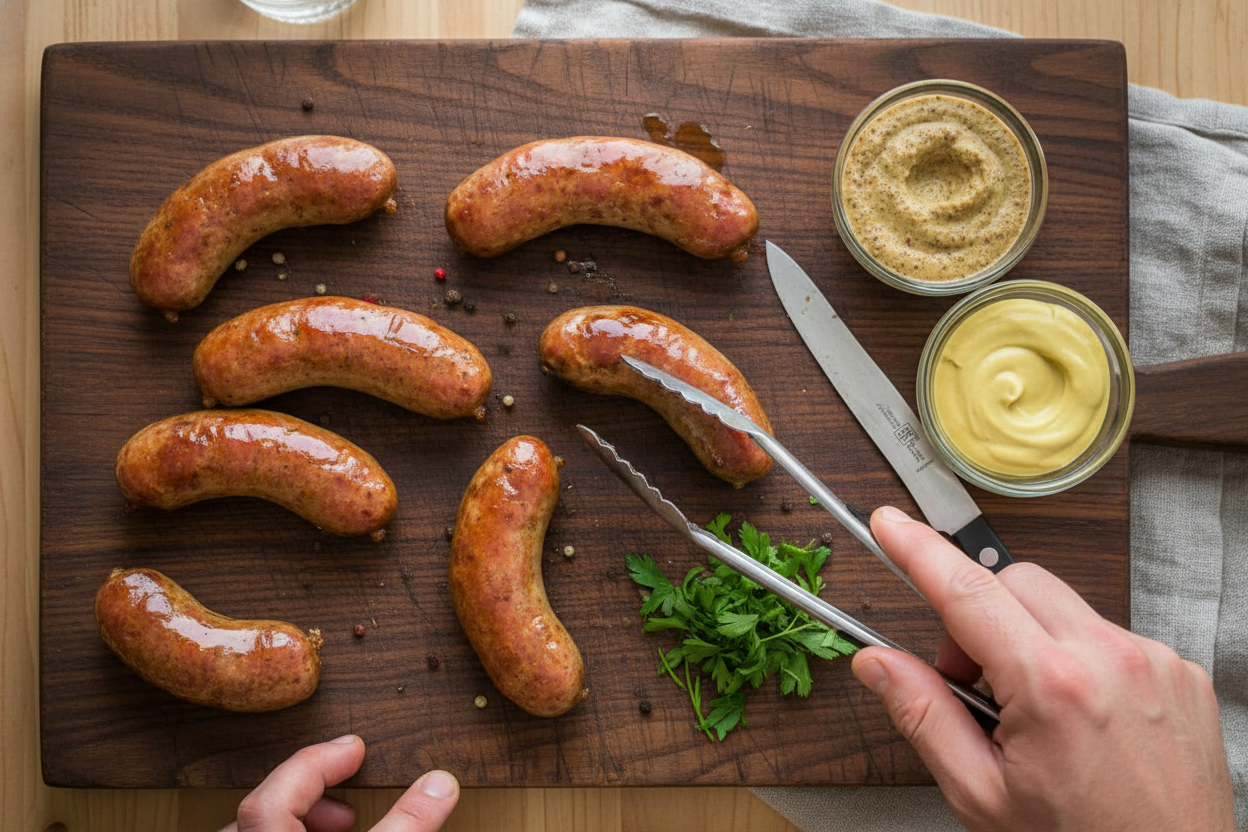
Homemade Sausage Recipe Video Tutorial
Description
Learn how to make authentic, flavorful homemade Kielbasa sausage with this detailed video tutorial. Perfect for grilling, baking, or sautéing.
Ingredients
Instructions
- Place meats on a baking sheet, cover with plastic wrap and freeze 1 1/2 hours. Should be very firm, not frozen solid. Place all meat grinder parts in freezer and refrigerate mixing bowl at least 30 min prior to using.
- Rinse casing well to remove salt and run warm water all the way through the casing. Let casing soak in warm water (90˚F water) for at least 1 hour or until soft and slick. Keep casings in water until ready to use.
- Remove 1/3 of meat from the freezer, dice into 1/4 thick pieces with a sharp knife and transfer to your chilled mixing bowl. Chop remaining meat into 2″ pieces so that it can easily go through the meat grinder. Set up your meat grinder (if using KitchenAid mixer, set to speed 4 using the large holes grinding plate) and grind meat into chilled bowl then grind bacon.
- Sprinkle seasonings over meat and toss by hand 30 seconds to distribute then add 1 cup water and mix meat by hand for 1 minute (or with paddle attachment on speed 1 for 1 minute), just until a light film forms on the outside of the bowl and the mixture binds to itself and can hold a patty shape. Cover and refrigerate your sausage mixture while you clean your grinder and set up your sausage maker attachment. Seasoning Tip: To test your meat for seasoning, form a small patty and saute it on a skillet to sample.
- Lightly oil the outside of your sausage tube attachment and thread 1 sausage casing over the tube leaving a 6″ tail hanging off the end. Do not tie the end – you want the initial air that comes through to escape.
- Remove ground meat from refrigerator, set mixer to speed 4 and add meat into hopper, pushing down with the plunger and adding more as you go. Use one hand to stuff the meat through and one hand to guide the filled casings. Fill firmly but do not overstuff, especially if making sausage links. Take care not to let big gaps of air into the tube. If you get air bubbles – no problem – you can poke the sausage casing with sausage pricker as you go. Let the sausage come out in one long coil until about 6″ of casing remains at the end then start with the new sausage casing.
- Pinch, twist and spin to make small sausage links or coil the sausage for the classic kielbasa look. Tie off the ends or tie with kitchen string if desired. Prick with sausage poker about every 2 inches, especially where you see air pockets, to prevent the sausage from bursting. Sausage can be baked, grilled or sautéed right away or can be refrigerated or frozen for later. Keeps well in refrigerator for 3-5 days or frozen up to 3 months.
Notes
- Full Nutrition Label: Servings: 4 lbs of sausage links




Leave a Reply