
Noodles That Taste Like Home
My grandmother always said pancit was a noodle for every day and every party. I still believe her. This Filipino dish is made of thin rice noodles, tender beef, and colorful vegetables all swimming in a savory broth. Doesn’t that smell amazing? You get soy sauce, garlic, and a little sweetness from the carrots. It fills the whole kitchen. What is your favorite noodle dish your family makes? I would love to hear about it.The Beef and the Broth
I use beef sirloin sliced very thin. That way it cooks fast and stays tender. You brown it first in hot oil, then set it aside. The secret is to use the same pan for the veggies and the broth. All those brown bits from the meat add so much flavor. You pour in beef broth, soy sauce, and a little oyster sauce. It makes a rich, salty-sweet sauce that the noodles drink up. *Fun fact: Pancit is the Filipino word for noodles, but it came from the Chinese word “pian i sit” which means “something that is conveniently cooked.”Veggies That Make You Smile
You add carrots first because they take the longest to soften. Then bell pepper and cabbage go in last. I like how the cabbage gets just a little soft but still has a crunch. Why does this matter? Because the different textures make every bite interesting. You get a soft noodle, a tender piece of beef, and a crisp veggie all at once. That is good eating. Have you ever tried cabbage in noodles before? It is my favorite part.A Little Story About a Big Mess
I still laugh at the first time I made pancit for my husband. I was so excited I dumped all the noodles in at once. The pot was too full and broth splashed everywhere. He just smiled and handed me a towel. We still ate every bite. Now I always toss the noodles gently, a handful at a time, so the broth covers them evenly. That is why this matters: cooking is not about being perfect. It is about sharing the mess and the meal with people you love.How to Serve It Right
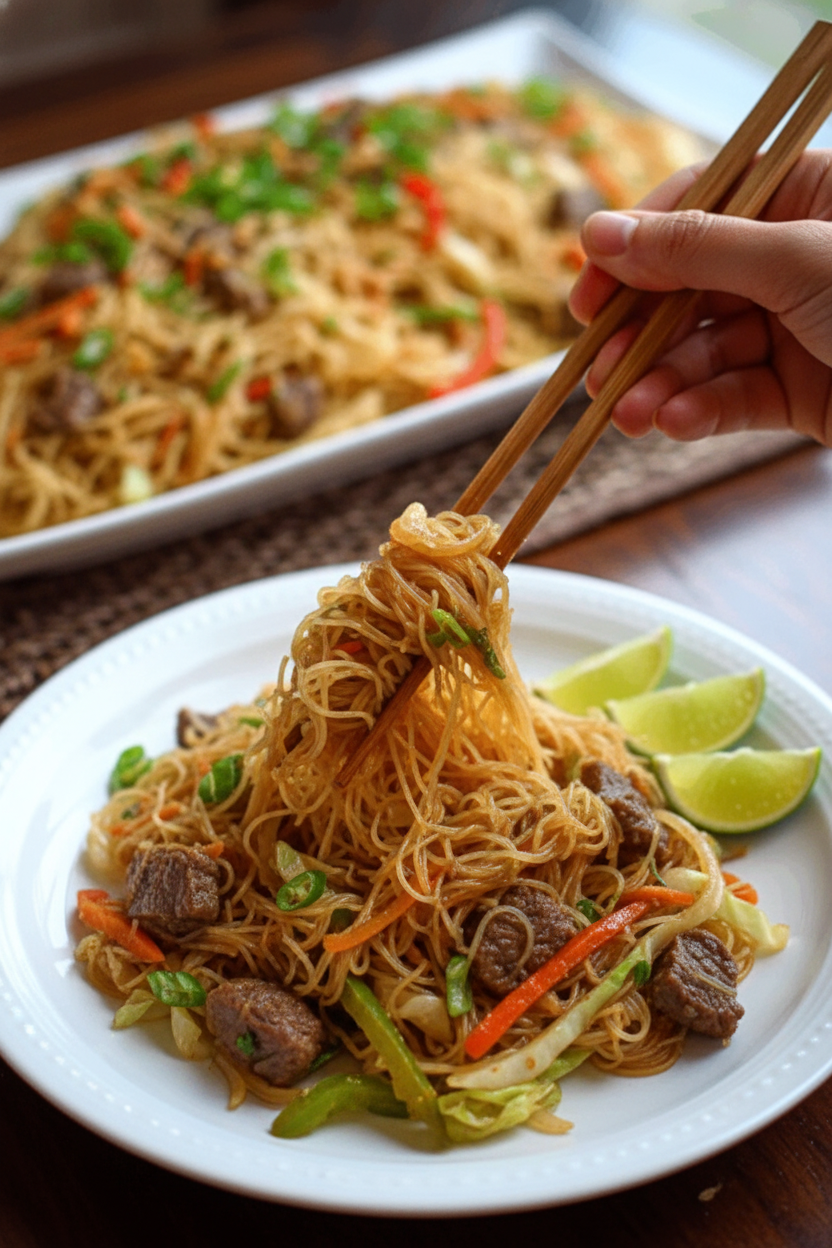
Pancit is never served alone. You always put lemon or lime wedges on the side. A squeeze of citrus brightens up all the flavors. Garnish with chopped green onions for color and a little bite. Some people like to add a sprinkle of crushed red pepper for heat. I keep it simple for my family. Do you like your noodles with a squeeze of lemon? I think it makes everything taste happier.The Pinch of Salt Rule
Here is a tip from my grandma. Do not season the dish until the noodles have soaked up the broth for a few minutes. The soy sauce and oyster sauce are already salty. Taste it first, then add salt and pepper only if you need it. That way you never end up with a too-salty dinner. What is your best tip for avoiding a salty mess in the kitchen? I would love to learn from you.Why These Noodles Fill the Heart
Pancit is more than just noodles. In Filipino homes, long noodles mean long life and good luck. That is why you always see pancit at birthdays and New Year celebrations. Even on a regular Tuesday, making this dish feels like a small celebration. You get warm food, happy smells, and a full belly. That is the best kind of luck. So next time you need comfort, try this recipe. And remember: do not dump all the noodles in at once.Ingredients:
| Ingredient | Amount | Notes |
|---|---|---|
| bihon rice noodles | 8 ounces | Soak in warm water for 10 minutes. |
| vegetable oil | 1 tablespoon | |
| beef sirloin | 1 pound | Sliced thinly. |
| garlic | 2 cloves | Minced. |
| onion | 1 medium | Sliced. |
| carrot | 1 large | Julienned. |
| green bell pepper | 1 small | Sliced. |
| cabbage | 1 cup | Shredded. |
| beef broth | 3 cups | |
| soy sauce | 3 tablespoons | Adjust based on preference for saltiness. |
| oyster sauce | 1 tablespoon | Adjust based on preference for saltiness. |
| salt and pepper | to taste | |
| green onions | to garnish | Chopped. |
| lemon or lime wedges | for serving |
Mom’s Pancit Recipe – A Noodle Bowl Full of Memories
I still remember the first time I made pancit for my own family. My mother stood beside me, whispering tips. This Filipino noodle dish always feels like a hug in a bowl.
Beef, veggies, and soft rice noodles soak up a salty, savory broth. It’s simple, warm, and perfect for a busy weeknight. Doesn’t that smell amazing?
The secret is in the prep. Slice everything thin so it cooks fast. That way, your beef stays tender and your veggies stay crunchy. (Hard-learned tip: Never skip soaking the noodles, or they’ll be chewy and stiff. Soak them in warm water for exactly 10 minutes.)
Let’s walk through it together, step by step. Grab your biggest skillet or wok. Pour yourself a glass of cold water. We’re about to make some magic.
Step 1: Soak the bihon rice noodles in a bowl of warm water. Let them sit for 10 minutes while you chop your veggies. When they feel soft and bendy, drain them and set aside. I like to use my fingers to gently separate them so they don’t clump later.
Step 2: Heat your skillet with 1 tablespoon of oil over medium heat. Add the thinly sliced beef sirloin. Cook it for about 5 to 7 minutes, until it’s nicely browned. Take the beef out of the pan and put it on a plate. My mom always said, “Don’t crowd the meat, or it will steam instead of brown.”
Step 3: In that same hot skillet, toss in the minced garlic and sliced onion. Sauté until the onion turns clear and smells sweet, about 2 minutes. This is where the kitchen starts to smell like home. Have you ever noticed how garlic and onion make everything better? Share below!
Step 4: Add the julienned carrot and sliced green bell pepper. Stir-fry them for 3 to 4 minutes until they’re tender but still have a little crunch. I love watching the orange and green pop against the dark pan. It’s like cooking art.
Step 5: Return the beef to the skillet. Add the shredded cabbage and stir everything together. The cabbage will start to wilt a little, which is perfect. Now pour in the beef broth, soy sauce, and oyster sauce. Bring it all to a gentle simmer.
Step 6: Add the soaked noodles to the skillet. Use tongs or two forks to gently toss everything together. Let the noodles cook for 5 to 7 minutes, soaking up all that savory sauce. Taste it and add salt and pepper if needed. My kids always sneak a noodle right from the pan—I still laugh at that.
Step 7: Take the pan off the heat. Sprinkle chopped green onions on top for freshness. Serve with lemon or lime wedges on the side. A squeeze of citrus brightens every bite. Now, dish it up and watch it disappear.
Cook Time: 25 minutes
Total Time: 40 minutes
Yield: 4 servings
Category: Dinner, Noodles
Three Fun Twists to Make It Your Own
Veggie Lover’s Pancit: Swap the beef for extra mushrooms, snow peas, and bok choy. Use vegetable broth instead of beef broth. It’s light, crunchy, and so satisfying.
Spicy-Sweet Pancit: Add 1 tablespoon of sriracha or chili garlic sauce along with the soy sauce. Toss in a handful of pineapple chunks at the end. The heat and sweet play beautifully together.
Garlic-Lime Shrimp Pancit: Replace the beef with 1 pound of peeled shrimp. Cook them for just 2 to 3 minutes per side. Squeeze extra lime over everything before serving. Which one would you try first? Comment below!
How to Serve and Sip Your Pancit
Serve this noodle bowl with a side of crispy lumpia or spring rolls. The crunch is a perfect contrast. A little dish of calamansi or lemon wedges on the table lets everyone add their own zing.
For a cozy drink, try a tall glass of cold calamansi juice or iced tea. Grown-ups might enjoy a light, crisp lager like a San Miguel. The bubbles cut through the savory noodles nicely.
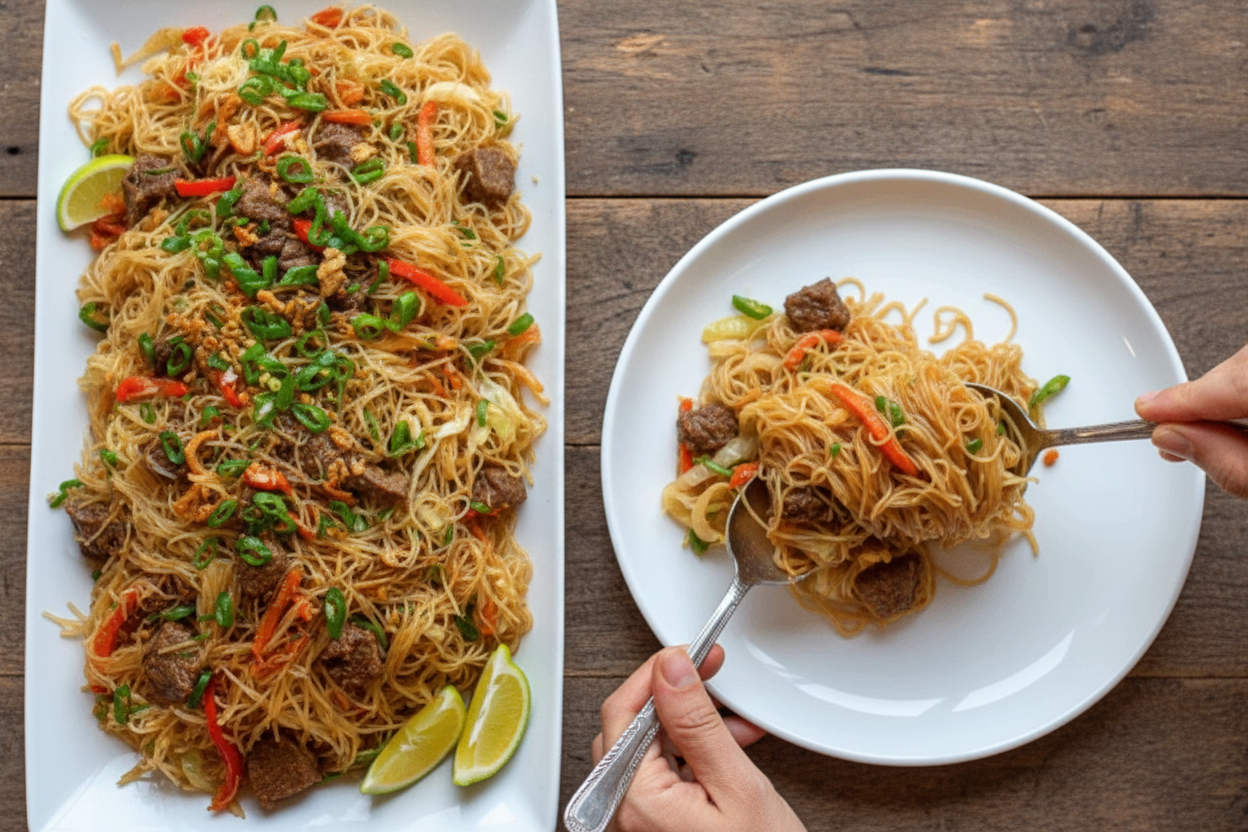
I love piling the noodles high on a big platter for sharing. Garnish with extra green onions and a few lime slices. Dinner feels like a celebration. Which would you choose tonight?
How to Store and Reheat Your Pancit Batch
This pancit tastes even better the next day. The noodles soak up all that lovely beef broth overnight. I learned this from my own kitchen mistake years ago.
I once made a huge batch for a family dinner. We had so much left over. I just put the whole wok in the fridge without covering it properly. The noodles turned dry and hard.
Here is the right way. Let the pancit cool completely first. Then put it in an airtight container. It stays fresh in the fridge for up to three days. For the freezer, use a freezer-safe bag and press out all the air. It keeps for one month.
To reheat, add a splash of beef broth or water to a pan. Warm the noodles slowly over medium heat. Toss them gently until hot. This brings back the soft, saucy texture. Have you ever tried storing it this way? Share below!
Why does this matter? Because good storage saves time and money. Batch cooking means you have a delicious meal ready on busy days. It is like giving yourself a gift later in the week.
Three Common Pancit Problems and Easy Fixes
Problem one is soggy noodles. This happens when you soak them too long. Just ten minutes in warm water is enough. I remember my first time I left them soaking while I answered the phone. Twenty minutes later, they were mush.
Problem two is salty or bland flavor. The soy sauce and oyster sauce are strong. Start with less. Taste as you go. You can always add more. Why does this matter? Getting the salt right makes the whole dish shine. It builds your confidence in the kitchen.
Problem three is clumpy noodles. They stick together when tossed too little. Use two spoons or tongs to lift and separate them gently. Add a little broth if they seem dry. Which of these problems have you run into before?
Why does fixing these issues matter? Because small changes turn a good meal into a great one. You learn to trust your own taste. That is real cooking skill.
Quick Answers to Your Pancit Questions
Q: Can I make this gluten-free? A: Yes. Use gluten-free soy sauce and rice noodles. Most bihon noodles are already gluten-free, but check the label.
Q: Can I prep this ahead of time? A: Yes. Chop all veggies and slice beef a day before. Store them in separate bags in the fridge.
Q: Can I swap the beef for chicken or shrimp? A: Yes. Cook chicken until no pink remains. Shrimp only needs two to three minutes.
Q: How do I double or halve the recipe? A: Double everything and use a bigger pan. For half, just use half of each ingredient.
Q: Any fun extra tips? A: Add a squeeze of calamansi or lemon at the table. It brightens every bite. Which tip will you try first?
*Fun fact: Pancit is a Filipino birthday tradition. Long noodles mean long life.
A Warm Goodbye from Lena
I hope this pancit brings warmth to your table. It is one of those dishes that feels like a hug in a bowl. Cooking it with love makes all the difference.
I would love to see your creation. Snap a photo and share it. Have you tried this recipe? Tag us on Pinterest! Just use the handle @LenaCooksWithLove.
Remember, every stir and taste teaches you something new. Keep cooking, keep smiling, and keep sharing your story. That is what makes food special.
Happy cooking!
—Lena Morales.
Filipino Pancit With Beef: Recipe, Culture, and Cooking Tips: Filipino Pancit With Beef Recipe Culture and Cooking Tips
Description
Experience the delightful contrast of textures and flavors with this Filipino Pancit With Beef, featuring tender beef, fresh vegetables, and savory noodles.
Ingredients
Instructions
- Soak the bihon noodles in warm water for about 10 minutes or until they soften. Drain and set aside.
- In a large skillet or wok, heat the vegetable oil over medium heat. Add the sliced beef and cook until browned and cooked through, about 5-7 minutes. Remove beef from the pan and set aside.
- In the same skillet, add the minced garlic and sliced onion. Sauté until the onion becomes translucent.
- Add the julienned carrots and green bell pepper to the skillet. Stir-fry for about 3-4 minutes until the vegetables are tender.
- Return the beef to the skillet and add the shredded cabbage. Stir well to combine.
- Pour in the beef broth, soy sauce, and oyster sauce. Bring to a simmer.
- Add the soaked bihon noodles to the skillet, tossing gently to combine all ingredients. Cook for an additional 5-7 minutes, allowing the noodles to soak up the flavors and heat through. Season with salt and pepper to taste.
- Remove from heat. Garnish with chopped green onions and serve with lemon or lime wedges on the side.
Notes
- For best results, do not overcook the noodles. Adjust soy sauce and oyster sauce to your preferred saltiness. Squeeze fresh lemon or lime over each serving for brightness.

Leave a Reply